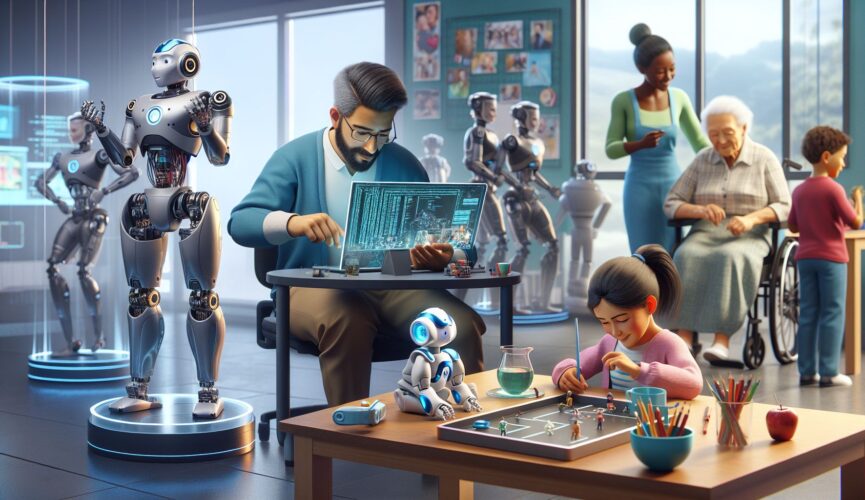
Hey tech aficionados! Today, I’m excited to talk about something that’s finally making our sci-fi dreams feel real: robots actually moving out of labs and into our daily lives. Picture this: robots vacuuming your floors, delivering pizza to your door, maybe even busting moves at the local dance recital. It’s not just Jetsons fantasy anymore.
The Current State of Robotics
Let’s be honest about where we actually stand with our mechanical friends today. Sure, robots have been around for a while, your trusty Roomba being the obvious example, plus those hypnotic robotic arms building our gadgets in factories. But why haven’t robots completely taken over our social feeds and transformed what we consider “normal” life?
Turns out there’s a lot happening just under the surface. Companies like Boston Dynamics (you’ve probably seen their videos and felt that weird mix of amazement and existential dread, wondering “Is that dancing robot awesome or plotting our doom?”) have created Atlas, a humanoid robot with gymnastics skills I could only dream of having.
Add some AI smarts and responsive algorithms, and autonomous robots are getting close to fitting naturally into human spaces. But like any big tech leap, the road has plenty of bumps.
The Integration Challenge
Integration is where things get really interesting and complicated. Between hardware obstacles, algorithm improvements, and getting society comfortable with robots, full integration makes your favorite TV cliffhanger look simple. (Don’t you hate when shows leave you hanging like that?)
Take Japan, for example. Their cultural openness to robotics gives them a real advantage in this space. There’s something fascinating about how different societies approach robot acceptance.
But there’s an ongoing conversation about how productivity innovations fit within human environments when we’re talking about true robot integration. It’s not just about the technology working, it’s about people being ready for it, regulations catching up, and figuring out the economic implications.
Looking Around the Implementation Corner
The real question is how we move from cool demos to actual everyday use. We’re seeing promising developments in healthcare, where robots assist with surgery and patient care. Manufacturing keeps pushing boundaries with more sophisticated automation. And honestly, the home robotics market is where most of us will first experience this shift.
What gets me excited is thinking about how these technologies will actually change our routines. Not in some distant future, but in the next five to ten years. The technical pieces are falling into place, even if the social and regulatory frameworks are still catching up.