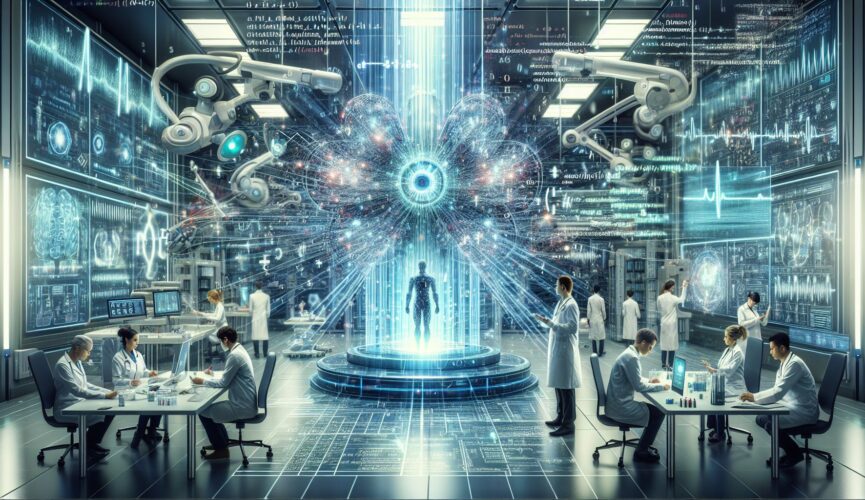
Hey there, tech enthusiasts! Got some exciting news from the world of artificial intelligence that might just get your gears turning. And no, it’s not another AI-generated cat meme (though, honestly, those never get old). We’re looking at how artificial intelligence is changing the way we approach healthcare diagnosis and treatment. Pull up a chair because this stuff is pretty wild.
The Latest Development
So, one fresh headline making the rounds is that a team of researchers has developed an AI system that can diagnose complex medical conditions faster and more accurately than traditional methods. We’re talking about a real shift from reactive medicine to proactive and predictive care. This is the kind of development that makes doctors sit up and take notice.
Blood Analysis Gets a Major Upgrade
Let’s start with something that might make you squirm a bit—blood analysis. Have you ever wondered what it would be like if a machine could determine your health status from just a drop of blood? Well, that’s basically what’s happening now. New AI systems can analyze blood panels in real-time, doing work that traditionally takes doctors years of training to master.
This means quick, preliminary diagnoses happen at lightning speed. We could potentially catch infectious diseases way before they become pandemics and create personalized treatment plans while you’re still buying groceries. All this saves precious time, which modern medicine never has enough of.
Medical Imaging Just Got Smarter
Let’s talk about another group of unsung heroes in healthcare—medical imaging. X-rays and MRIs have always been essential tools. But imagine walking into the radiology department and before you can even pronounce “pneumothorax,” AI systems have already analyzed your images with superhuman precision.
This level of image recognition means misdiagnoses might become a thing of the past. These programs work tirelessly, hitting diagnostic targets with laser precision. The margin of human error gets dramatically reduced, which means lives get saved through faster, smarter decisions from AI-assisted radiologists.
The Delicate Balance Between Doctors and AI
Of course, there’s a healthy dose of skepticism when we start talking about machines taking over medical decisions. We’re all a little nervous about this stuff. After all, trusting mysterious algorithms with our health doesn’t come naturally. The smart approach seems to be doctors maintaining oversight while leveraging AI’s capabilities.
And that’s where things get tricky. Challenges to AI adoption include integration headaches with existing hospital systems and regulatory hurdles that move slower than molasses. Hospitals are understandably cautious about validation and worried about liability when AI makes the wrong call.
The key is finding the right balance between human expertise and machine efficiency. It’s a dance that healthcare is still learning.
What’s Next?
So where does this all lead? I think we’re looking at a future where both major medical centers and small community clinics have access to AI diagnostic tools. The technology could help level the playing field, giving smaller practices access to the same advanced capabilities as big hospitals.
But we need to be realistic about the timeline. Healthcare moves slowly for good reasons—people’s lives are on the line. Integration will happen gradually, with lots of testing and validation along the way. There are also questions about bias in AI algorithms that need addressing.
The most promising scenario is probably AI working alongside doctors, not replacing them. Think of it as giving physicians superpowers rather than making them obsolete.
Final Thoughts
Look, this AI healthcare revolution is happening whether we’re ready or not. The technology is impressive, but it’s not magic. We still need human judgment, empathy, and oversight. The goal should be better patient outcomes, not just cooler technology.
What excites me most is the potential for catching diseases earlier and making quality healthcare more accessible. If AI can help a small-town clinic provide big-city-level diagnostics, that’s a win for everyone.
The future of healthcare is definitely going to be interesting. Whether it’s better remains to be seen, but I’m cautiously optimistic about where this technology could take us.