The Agent Mode Inflection Point
There’s a moment in every senior engineer’s career when something shifts. You’ve seen enough technology cycles to recognize genuine inflection points versus hype. Agent Mode isn’t hype. Early 2025 is the moment when AI coding assistants stopped being autocomplete-on-steroids and started becoming autonomous contributors that can navigate your entire codebase, edit multiple files in sequence, execute terminal commands, and iterate on their own output without waiting for you to prompt them again.

This matters because code review as we’ve practiced it for the past fifteen years assumes a fundamental constraint: one human wrote the code, and another human reads it. The cognitive load is manageable. The patterns are recognizable. You know what human mistakes look like. You’ve trained your eye to spot them. But when an AI system can autonomously refactor three interconnected modules, update test fixtures, and regenerate documentation across a monorepo without touching a keyboard between steps, the entire epistemology of review changes. You’re not reading code anymore. You’re auditing a decision tree.
The Adoption Curve Is Already Steep
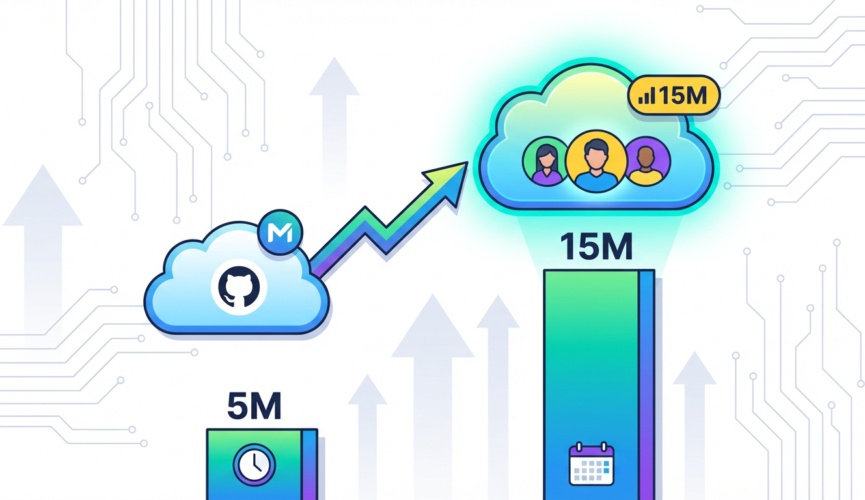
The numbers aren’t subtle. The Stack Overflow Developer Survey 2025 found that 76% of developers are now using or planning to use AI coding tools, compared to 44% just two years ago. That’s not gradual adoption. That’s crossover. And GitHub’s own reporting shows their Copilot user base has tripled from 5 million to over 15 million active users since early 2024. You’re not debating whether your team needs to think about this. Your team is already using it, or will be within the next sprint.
What this means operationally is that your review queue is changing composition whether you’ve formally decided it or not. Junior developers are using Agent Mode to scaffold entire features. Mid-level engineers are leaning on it to handle the boilerplate before they implement the hard parts. And senior engineers who’ve been dismissive are quietly using it for refactoring tasks they’d otherwise defer because they’re “not interesting enough.” The question isn’t adoption anymore. The question is governance.
The Logic Error Problem Nobody’s Ready For
Here’s where it gets uncomfortable. A 2025 study from Carnegie Mellon’s Software Engineering Institute examined pull requests written with AI assistance and compared them to human-authored code at similar complexity levels. The finding: AI-assisted pull requests had a 23% higher rate of subtle logic errors that bypassed automated test suites. Not crashed. Not obviously broken. Logic errors that tests didn’t catch. Errors that sometimes don’t surface until they interact with production traffic patterns or edge cases your test suite never anticipated.
This is the part nobody wants to talk about at standup. Your linter is happy. Your tests pass. Your type checker signs off. But the business logic has a flaw that’s three layers deep in conditional state. An AI system can reason about code correctness locally, but it can’t always reason about it globally against three years of accumulated domain complexity and implicit business rules that never made it into comments. Your code review process, which probably assumes that automated checks catch the obvious mistakes and humans catch the subtle ones, now has to catch the subtle logic errors that are more likely to exist in the first place.
Security Review Is Quietly Becoming Unmoored
The security angle is where this gets genuinely concerning. GitLab’s 2025 DevSecOps Report surveyed security teams about their confidence in current review processes, and the result was telling: 61% said they weren’t confident their existing processes could catch vulnerability introductions from AI-generated code. Not “somewhat unsure.” Not “needs improvement.” Not confident. That’s a significant majority of security-focused teams acknowledging they don’t have adequate visibility into what AI is writing.
The problem is structural. Security review often works through pattern recognition. A security engineer sees a dangerous API call, a missing validation check, a cryptographic mistake, and flags it. But AI systems can generate code that’s syntactically correct, passes all the safety checks you’ve automated, and still introduces a subtle vulnerability through logic that’s just different enough from patterns your team has seen before. An AI system doesn’t make the same mistakes repeatedly. It generates novel mistakes. That’s actually worse for security review, because you can’t just build rules around common antipatterns.
What Code Review Needs to Become
So what does this mean for how you actually practice code review going forward? The honest answer is that your current process is becoming partially obsolete, and that’s a good thing because it forces you to be more intentional about what code review is actually for. You’re not going to review AI-generated code the same way you review human code. You can’t. The error profile is different. The confidence model is different.
First, you need to invert some of your assumptions. Instead of “does this code look correct,” the question becomes “does the AI system understand our domain constraints.” Before you approve an AI-generated PR, you need to verify that the system actually knows about the business rules, the performance characteristics, the implicit contracts between systems. That means better prompting frameworks, better documentation of assumptions, and possibly better tooling to surface what the AI “believed” when it generated the code.
Second, you need to make automated checks harder to pass. If 23% of AI code has logic errors that tests miss, then your test strategy needs to evolve. This doesn’t mean writing three times as many tests. It means writing smarter tests that verify domain invariants, not just surface behavior. Property-based testing becomes non-negotiable. It means understanding the failure modes of your AI system and testing specifically against those.
Third, you probably need a new category in your PR review process. Not just “approved” and “changes requested,” but something that acknowledges the confidence level. Something that says “this AI generated code, I’ve verified it aligns with our domain, tests pass, but I’m flagging this for higher-context review before deployment.” The senior engineer who wrote the original feature should probably see AI-generated changes to it. That context matters.
The Moment Demands Clarity, Not Caution
Here’s the thing nobody wants to admit: you’re going to have to trust AI code more than you trust it right now, while simultaneously being more skeptical about specific things. That’s not contradictory. It’s realistic. The adoption curve is too steep for caution to be a strategy. Three-quarters of developers are already using these tools. Ignoring that won’t make it safer. Building better governance around it will.
The window to shape how this happens is narrow. Right now, in early 2025, teams are still making decisions about how to integrate Agent Mode. You can influence whether your organization builds robust review processes or just rubber-stamps what the AI generates. You can establish whether security review becomes a real bottleneck or gets thoughtfully integrated into the workflow. You can decide whether code review becomes better or just faster.
The future of code review isn’t “AI does it all” or “humans do it like they always have.” It’s a hybrid practice where both humans and AI have specific, defensible responsibilities. The senior engineers who figure that out first won’t be the ones fighting these tools. They’ll be the ones who made these tools actually safe enough to trust.
What’s your organization doing right now to evolve code review for Agent Mode? I’d genuinely like to know what’s working and what’s not. The signal is still being separated from the noise, and this is the moment when that separation actually matters.