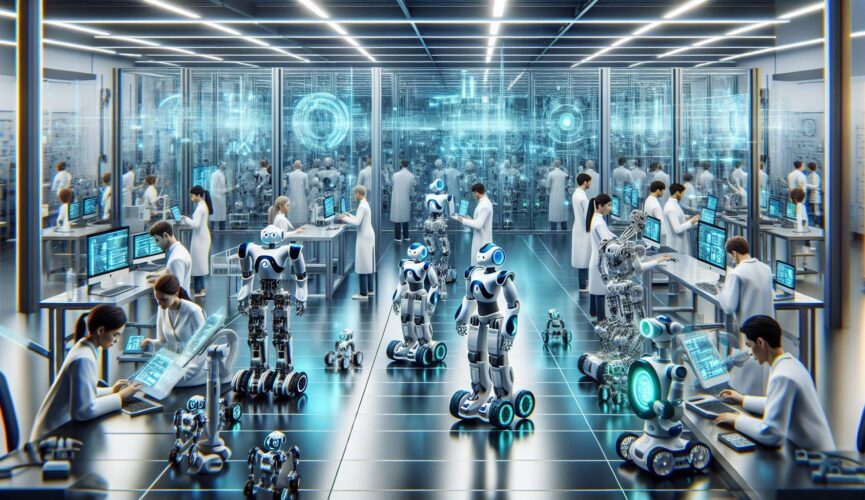
Hey everyone, buckle up—today we’re diving headfirst into the world of robotics! Spoiler alert: I’m pretty excited about it. Robotics isn’t the stuff of dystopian thrillers anymore (sorry, Asimov). It’s become our reality, complete with a seriously wild storyline. Whether it’s your pizza-delivering drone, an emotional support robot, or a mechanized Beethoven in music studios, we’re living in genuinely science-fiction times.
Bots on the Brain: Our Fascination with Robotics
When I was a kid, robots seemed like something we’d encounter around “the year 2000.” Fast forward to December of 2023 and, well, we’re doing just fine! The world isn’t exploding (yet), Elon Musk didn’t replace humans back in 2020 to run the factories, and Sarah Connor isn’t leading a rebel alliance against Skynet. But enough reminiscing—let’s look at what’s really happening!
Thinking back to turning our old PlayStation into a makeshift robot toy at home, it’s wild to see how far real robots have come. Last week, I stumbled across something mind-blowing. Meet Polylactic—a project by researchers coding faster than R2-D2: an entirely self-replicating, warehouse-roaming, assembly-working robot supply chain.
Meet the Makers: Companies Turning Sci-Fi into Reality
By now, many of you have heard about firms like Boston Dynamics and their dancing robots (seriously, they’re dancing). But there’s more happening. Robotics companies are working with the same apps, sensors, and scanners we know, powered by algorithms and engineers who probably drink way too much coffee. You wouldn’t have imagined Kickstarter campaigns bringing kids’ coding robots to mainstream markets back then! Today, we have funded projects like Intuition Robotics’ ElliQ robot that actually engages with us emotionally.
Honestly, we’re already pushing the boundaries of innovation in ways I never expected. Companies like Agility Robotics in Oregon are tackling logistics challenges that seemed impossible just a few years ago.
Quick sidebar: I’ll admit I’m still getting used to how quickly this technology is advancing. Sometimes it feels almost too fast.
The Technical Stuff
So how do these incredible robots actually work? They run on sophisticated integrated circuits and advanced processing systems. The engineering behind these machines involves complex algorithms, sensor arrays, and adaptive AI systems that can respond to their environment in real-time.
Advanced AI maintains the core functionality through machine learning models that can adapt and improve over time. These systems process enormous amounts of data to make split-second decisions, whether they’re navigating a warehouse floor or interacting with humans in social settings.
Dude, Where’s My Job? (Addressing Workforce Concerns)
Look, I get it. The workplace automation conversation makes people nervous. There’s legitimate concern about robots replacing human workers, and we shouldn’t just brush that aside. The transition is happening whether we like it or not, and it affects real people with real families to support.
Can Robots Help With Inequality?
Here’s where things get complicated. Robotics could potentially democratize access to certain services and reduce costs for essential tasks. But it could also widen the gap between those who own the technology and those who don’t. The benefits aren’t automatically distributed fairly, and that’s something we need to think about seriously.
Some argue that robotics will create new types of jobs even as it eliminates others. Maybe that’s true, but the transition period is rough for people whose skills become obsolete overnight. We need better support systems for workers navigating these changes.
Looking Forward
The robotics revolution is happening, and it’s moving faster than most of us anticipated. Whether that’s exciting or terrifying probably depends on your perspective and how directly it affects your life.
Final Thoughts
Here’s what I think: robotics technology is advancing at breakneck speed, and we’re only beginning to understand its implications. The potential benefits are enormous, but so are the risks. We need thoughtful policies and genuine consideration for how these changes affect everyone, not just tech enthusiasts and investors.
The robots are here, they’re getting smarter, and they’re not going anywhere. How we handle this transition will define the next chapter of human society. No pressure, right?
Thanks for sticking with me through this exploration of our robotic future. What do you think? Are you excited about robot helpers, or does the whole thing make you nervous? Let me know in the comments.